
Here's what nobody tells you about bringing toys into partnered sex
Most people think you need a calm evening, a glass of wine, maybe some lighting, and the ability to say things like "I'd really like to explore adding a vibrator to our intimate time together." That's one way to do it. But it's also why most people never actually do it. The formal conversation feels scarier than the vibrator itself.
The truth is that you don't need to have the conversation perfectly. You need to have it at all. And it turns out the easiest way to do that is often not in conversation at all. It's in action, with permission built in, step by step.
Why the awkward-talk barrier is actually the only real barrier
There's a lot of research on why couples struggle to introduce toys, and almost all of it points to the same root: not that people are uncomfortable with vibrators, but that they're uncomfortable saying the word "vibrator" out loud to their partner. The neurological distance between thinking "I want to try a lemon clitoral vibrator" and saying it is genuinely enormous.
This matters because most partnered sex happens in a culture of silence around pleasure. We're taught to have sex, but not to talk about having sex. So when you're 5, 10, or 20 years into a relationship, that silence has built up structural walls. Those walls don't collapse because you found the right words. They soften because you take a small action and keep moving.
What I see working in practice: people who introduce a vibrator without the preamble conversation, with explicit permission before they start, tend to have better outcomes than couples who tried to "talk first." The toy becomes the translator.
The three ways people actually introduce vibrators (ranked by what works)
1. The "I got us something" move (least awkward, highest buy-in)
You buy a clitoral vibrator (a lemon vibrator works beautifully here because the design is discreet and the suction mechanism is distinct from what they might have experienced before). You pick a moment when you're already intimate, clothes are off, and you're kissing. Not deep in the action yet. Just the warm, present beginning.
You hold it up and say something like: "I picked this up. I want to try it with you. You okay with that?" That's it. No explanation. No apology. No backfill narrative about why you wanted it.
Their answer is either yes, no, or "let me think about it." All three are fine. If it's yes, you're moving forward together. If it's no or maybe later, you've still done the brave thing, which is state a desire clearly.
Why this works: it's not a referendum on your relationship or their sexuality. It's a specific, bounded ask in a moment that already feels intimate. The vibrator itself does the explaining.
2. The "let me show you this" move (medium awkward, medium buy-in)
You mention it outside the bedroom. Not deeply, just casually. "I ordered a vibrator for us to try. No pressure, just thought it might be fun." Then you show them. Not in a clinical way. Show them how it feels in your hand, what the sensation is like, let them hold it and feel how it works. Demystification kills awkwardness faster than conversation does.
Then you set it aside. You don't use it immediately. You let the idea sit for a day or two. When you're next intimate, you can bring it up again without it feeling like you've been planning an ambush.
Why this works: seeing and touching the actual object makes it real and less scary. It's also a gift, which frames your desire as something for "us," not just you.
3. The "honest conversation" move (most awkward, but deepest)
Some couples will get to this point naturally. You're lying in bed, maybe post-sex, maybe in the morning. You say: "I've been thinking about trying something new. A clitoral vibrator. I think it might feel really good. I'm interested in exploring that with you."
Then you listen. You answer questions. You might talk about why you want it, what you're hoping for, how you imagine it working.
This only works if both partners are basically comfortable with direct sex talk already. If you're starting from a place of silence, it's usually not the best entry point. But once you've already introduced a vibrator through action, this conversation becomes much easier.
Why this works: it's honest and direct. It creates space for both people's feelings. But it requires baseline comfort with sexual conversation, which many people don't have yet.
What to actually do once you introduce the vibrator
Let's say you've made the introduction. You have permission. Now what?
Start solo. Use the lemon vibrator on yourself while your partner watches and participates (kissing you, touching you, being present). This has multiple benefits: they see what it feels like for you. Your pleasure becomes visible and audible. There's zero pressure on them to "perform" with a new tool. And honestly, watching your partner experience pleasure is a genuine turn-on for most people. You're not removing them from the experience. You're just repositioning them.
After one or two times, you can invite them to use it on you. "Want to try?" is the whole script. Let them set the pace. If they're hesitant, go back to you using it while they're close. Confidence builds over time, not overnight.
On sensation: the lemon clitoral vibrator uses suction and pulsing, not traditional vibration. This feels different from hands or fingers. It's more diffuse, less direct. Some people come from it faster than they expected. Some need more time. Both are normal. The first time isn't a performance test. It's information gathering.
The actual hard conversations that come later (and how to have them)
Once you've used the vibrator together a few times, you might hit a different kind of awkwardness. Maybe your partner wants to use it all the time. Maybe you want to use it and they feel left out. Maybe they loved it and you felt disconnected. These are real conversations worth having, but they're easier because you have a concrete thing to reference.
Instead of "we never talk about sex," it becomes "when we use the vibrator, I felt distant, and I want to figure out how to reconnect." That's a solvable problem with texture and specificity.
If your partner feels insecure about the vibrator (worried it means you don't enjoy their touch), you can say directly: "That's not what this is. This is a different sensation. It doesn't replace you. I like having options." Again, specific and clear.
The vibrator itself often creates the permission for deeper conversations because you've already broken the silence.
When awkwardness is actually avoidance
Here's the harder part: sometimes the awkwardness isn't just about communication style. Sometimes it's a sign that there's something else going on. Maybe your partner is dealing with shame around sexuality. Maybe there are trust issues. Maybe one person wants something the other doesn't.
If you introduce a vibrator and get a flat no, or a no that surprises you, that's worth exploring. Not in the bedroom. Not in the moment. Later, when you're both clothed and calm, you might ask: "I felt some resistance when I brought that up. Is there something I'm missing?"
Then you listen without defending. You might hear something like "I worry it means you're not satisfied with me" or "My ex wanted things I didn't want, and now toys feel scary" or even "I just need more time to think about it." Those are all real concerns that deserve real response.
You're not trying to convince them. You're trying to understand. And you're signaling that their comfort matters more than getting to use the vibrator.
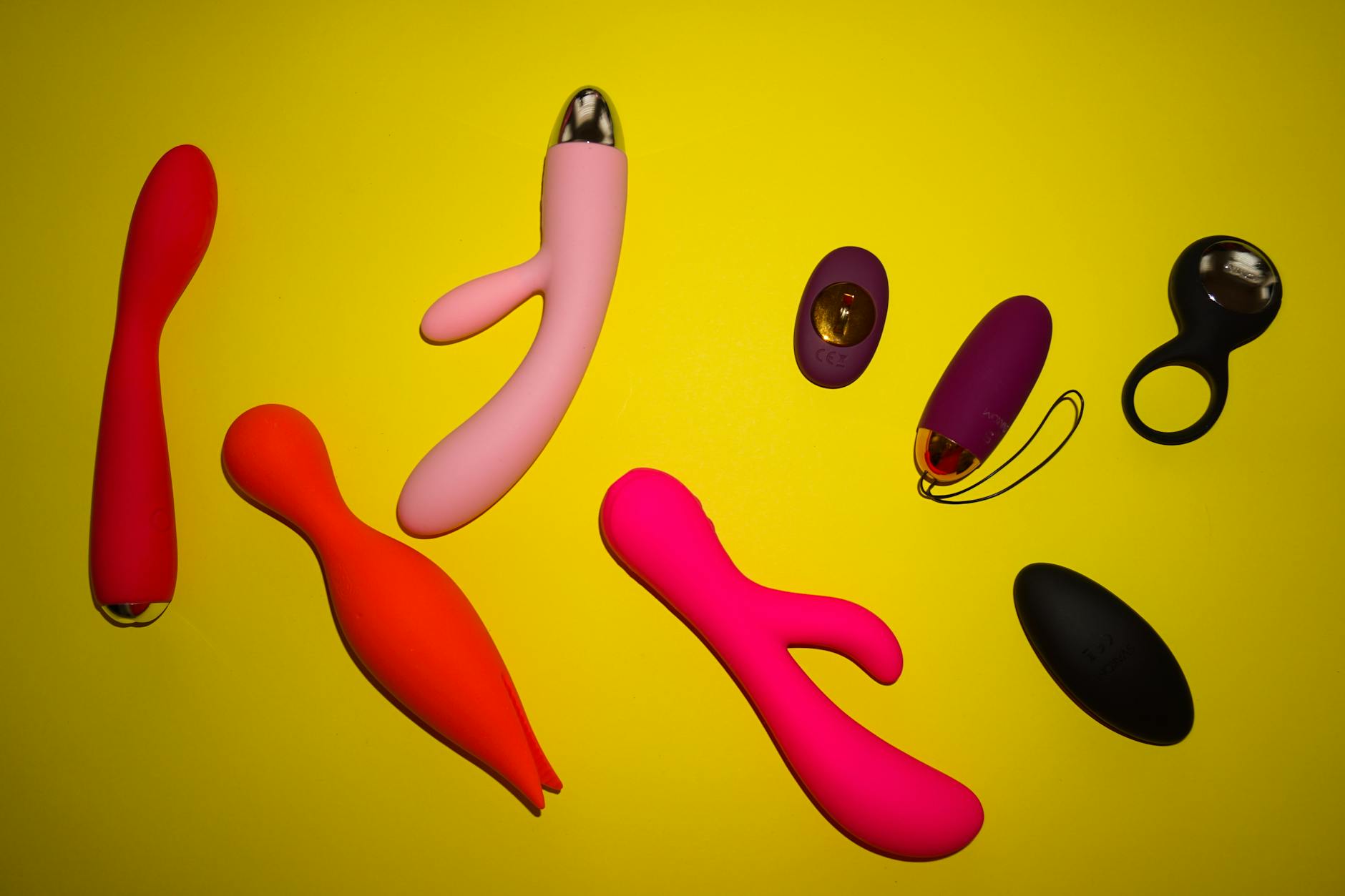
Photo by FounderTips on Pexels
A note on pleasure as an invitation
When you bring a vibrator into partnered sex, you're not just introducing a new tool. You're saying: "My pleasure matters. Exploring pleasure together matters. I want us both to feel good." That's actually a profound statement in a culture that tells us sex is either for procreation or for someone else's pleasure, never for our own.
Some partners will hear that immediately and lean in. Some will need time. Some will be defensive at first, then curious. That variation is normal. Your job isn't to make them comfortable with the vibrator. Your job is to stay clear about why it matters to you, stay open to their experience, and keep showing up with honesty.
If you're using a lemon vibrator with a partner who's reluctant, remember: you're not trying to change their mind. You're inviting them into something that feels good to you. The invitation itself, done with care and without pressure, is enough.
When to consider talking to someone
If you and your partner have talked about introducing a vibrator and it's created real conflict, that might be worth exploring with a couples therapist or sex-positive relationship coach. Not because wanting to use a vibrator is weird. But because the conflict underneath it might be about vulnerability, trust, desire mismatches, or shame that benefits from professional support.
Therapy isn't about convincing your partner to be okay with toys. It's about creating space for both of you to explore what the resistance is actually about.
The simplest version
You don't need the perfect conversation. You need to be brave enough to say "I want to try this" and brave enough to listen to whatever your partner says back. The lemon clitoral vibrator is just the vehicle. The real risk you're taking is being honest about your pleasure. That's terrifying and worth doing anyway.
Frequently asked questions
What if my partner thinks vibrators mean I'm not attracted to them?
This is the most common fear, and it's rooted in a myth: that a vibrator is a replacement for a partner. It's not. A vibrator feels different from hands or a penis. Enjoying one doesn't mean you don't enjoy the other. The clearest way to address this is through action. Use the vibrator while they're present, kissing you, inside you if that's how you have sex, holding you. The vibrator becomes one element of partnered sex, not the substitute for it. If the insecurity persists, that's often a sign there's something else underneath that deserves attention.
How do I bring it up if we never talk about sex?
You don't have to start with a formal conversation. Buy the vibrator. Show it to them in a low-stakes moment. Let them hold it. That's the beginning of the conversation. Action often moves easier than words in relationships where sex has been silent. If it feels right, you can follow up later with "What did you think?" But the introduction itself doesn't require an elaborate speech.
What if they say no?
That's a real answer and it deserves respect. You can ask follow-up questions in a separate conversation: "Can you help me understand what you're hesitant about?" But if they're genuinely not interested, pushing will damage trust. You can revisit it in six months or a year. You can also use a vibrator on your own, which is a completely separate choice. A no to partnered use doesn't have to mean a no to personal use.
Is it okay to use a vibrator if my partner doesn't know about it?
Yes. Your solo sexuality is separate from your partnered sexuality. That said, if your relationship has good communication, it's usually easier long-term to mention it. "I've been using a vibrator on my own and I like it. I'm thinking about trying it with you at some point." That's different from hiding it, and it opens the door without pressure.
What if we try it and one of us doesn't like it?
Then you stop using it and try something else, or you don't. Not everything works for everyone. That's not a failure. It's information. You might return to it later. You might never use that particular vibrator again. Both are fine. The point was to try it together, and you did.
How often should we use it?
There's no right frequency. Some couples use a lemon vibrator during most partnered sex. Some use it occasionally. Some introduce it, try it a few times, and then it becomes part of the rotation without being discussed again. Let it evolve naturally. If one person wants to use it more than the other, that's a conversation to have. But there's no timeline or quota.
The real thing happening here
When you introduce a vibrator to your partner despite awkwardness, you're not just adding a toy to your sex life. You're building capacity for honesty. You're saying "my pleasure deserves attention." You're inviting your partner into something vulnerable. Some partners will rise to that. Some will need time. Some will surprise you with how into it they are.
What matters is that you tried. You moved past the silence. And from there, everything else gets easier.